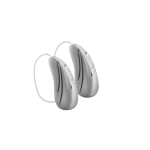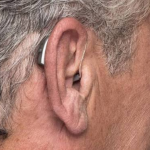
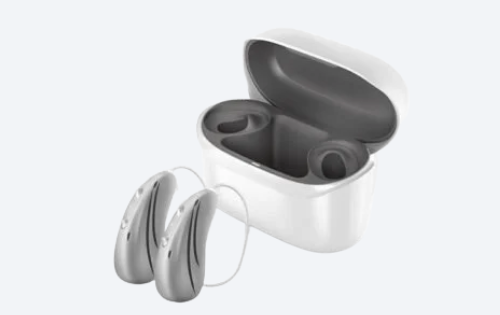
One of the practical decisions when choosing a hearing aid is how it is powered. Modern hearing aids use either built-in rechargeable batteries or small disposable zinc-air batteries. Both work well, and the best choice depends on your routine and preferences.
Rechargeable hearing aids
Rechargeable hearing aids contain a built-in lithium-ion battery. You place them in a charger overnight, much like a smartphone, and they are ready for the day in the morning.
Advantages
- No tiny batteries to change. Ideal for people with limited dexterity or poor eyesight.
- Convenient routine. Charge at night, wear all day.
- Environmentally friendly. No disposable batteries to throw away.
- Better sealing. Without a battery door, many rechargeable models offer excellent protection against moisture and dust.
Things to consider
- You need access to electricity to charge them, so consider a portable power bank or charger during load-shedding or travel.
- Battery capacity gradually decreases over several years, as with any rechargeable device.
Disposable battery hearing aids
These use standard zinc-air batteries in sizes 10, 312, 13 or 675. Smaller batteries are used in tiny in-canal devices, while larger ones power strong behind-the-ear models.
Advantages
- No charging required. Swap in a fresh battery in seconds, anywhere.
- Great for high-power needs. Size 675 batteries support powerful BTE hearing aids for severe to profound loss.
- Suits the smallest styles. Many CIC and IIC models use size 10 batteries.
Things to consider
- Batteries need replacing regularly, depending on size and usage.
- Small batteries can be difficult to handle and must be kept away from children and pets.
Which should you choose?
Choose rechargeable if you value convenience and easy handling. Choose disposable batteries if you need the smallest custom style, very high power, or have unreliable access to charging.
Hansaton offers both. Explore our rechargeable Hansaton hearing aids or view the complete range.